


What is the appropriate size for the opening leaf of a hinged window?
Do you know what the appropriate opening size for a flat-opening window should be? In reality, the national guidelines for door and window safety applications do not explicitly define the maximum allowable area of the window sash; instead, they emphasize a series of related performance characteristics—such as air tightness, water tightness, and wind pressure resistance—while also covering various other indicators, including the service life of the hardware components and the magnitude of the opening/closing force. Nevertheless, even under these guidelines, flat-opening window sashes should not be made too large. This is because an excessively large sash will not only make operation more cumbersome during daily use but may also lead to sagging over time.
For the opening leaf of a hinged window: the width should neither be too large nor too small; the standard size is approximately 700 mm
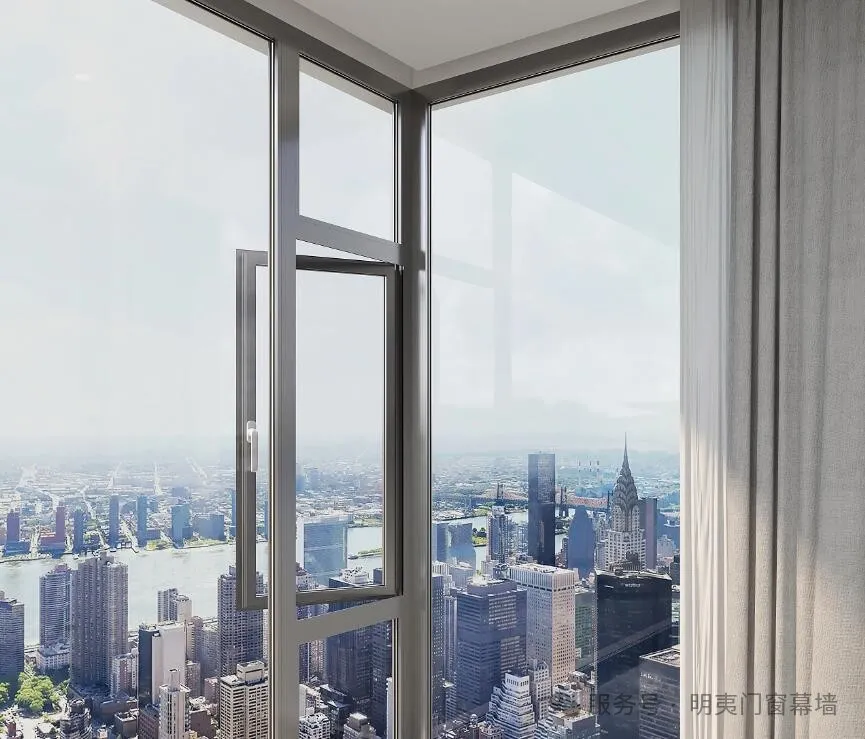
To enhance overall aesthetics, the height should be set around 1400 mm, depending on the actual dimensions of your space.
If the window sash is too large, on one hand, its excessive weight may cause the hardware components to deform; on the other hand, it can directly create inconvenience during daily use and pose a threat to personal and property safety. For example, with an outward-opening window, the user must sequentially perform the movements of "extending the arm → bending forward" to open the window. Therefore, when using a large sash on an outward-opening window, special attention must be paid to safety issues. In such cases, even the slightest lapse in caution may lead to loss of balance, resulting in a dangerous fall and potentially causing irreversible consequences. Furthermore, closing a sash that is excessively large requires greater effort, making it more difficult for elderly individuals and children to operate.
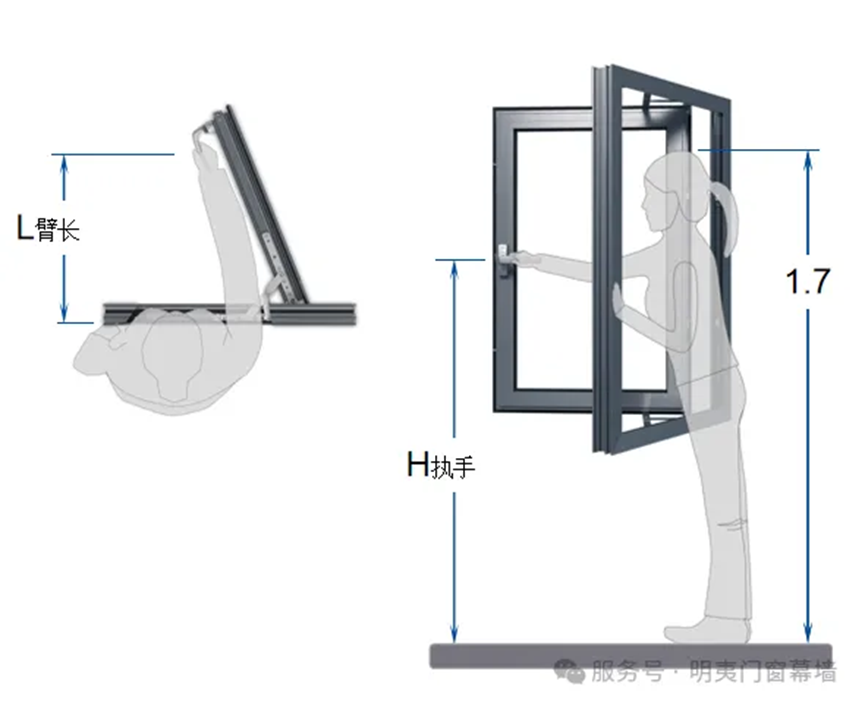
How large should a window (external-opening window / sliding window) be? When addressing this question, we cannot focus solely on the window area; attention must also be paid to these other factors.
I. The glass area should not be too large.
It is important to recognize that glass offers a significantly lower safety rating compared to traditional masonry walls! When exposed to external forces such as strong winds or earthquakes, or when subjected to conditions like material aging, corrosion, or defects, doors, windows, floor-to-ceiling windows, and balcony enclosures in homes can easily develop safety hazards. Therefore, the quality of the glass undoubtedly affects the overall safety and functional performance of these components. For instance, during extreme weather conditions, substandard glass cannot withstand the applied pressure; not only will it shatter, but it may also cause damage to the surrounding door or window frame, posing a serious threat to household safety.
For doors and windows, use 3C-certified insulating tempered glass (although some may opt for laminated glass or other types); when selecting doors, windows, or glass, it is essential to be thorough – understand
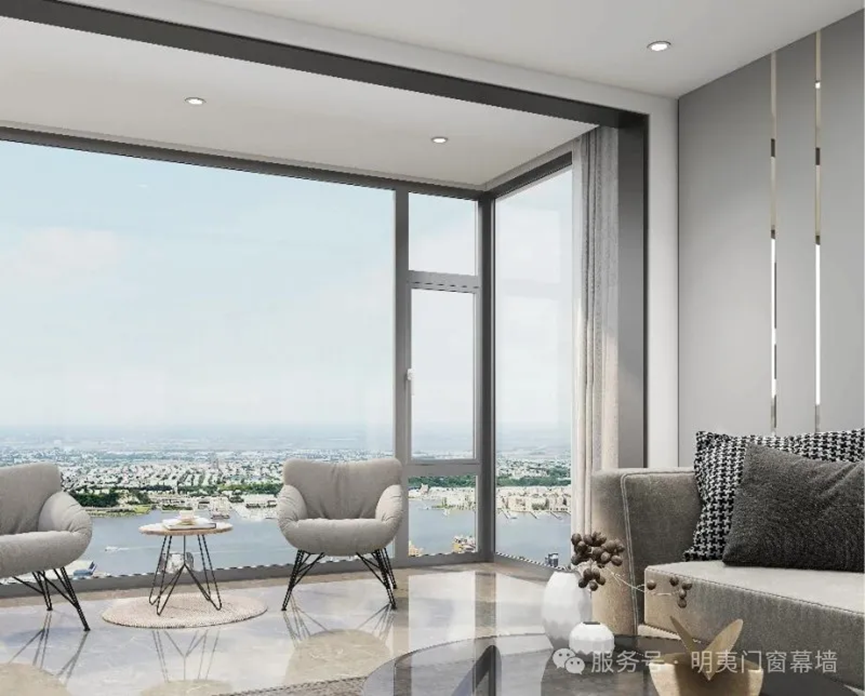
the glass brand and verify whether details such as glass thickness, color, and light transmittance comply with relevant standards.
When installing window glazing, it is important to note that single-sided glazing should not be excessively large; the larger the glass area, the greater the pressure-bearing load on the frame structure (not all products are suitable for large glass areas), and the higher the likelihood of the door or window becoming unstable or vibrating. As the area of floor-to-ceiling windows increases, the thickness and strength of the glass must also be correspondingly increased to ensure sufficient wind resistance. Please take note of the following information: when the fixed glass area of a door or window is ≤ 2.5 m², a glass thickness of 5 mm can be selected; when the glass dimensions of the door or window fall between 2.5 m² and 3.6 m², the glass thickness should be at least 6 mm. Below, we provide a comprehensive calculation formula for this purpose:
5 cm glass: <2.5 m²
6 cm glass: 2.5 m²–3.6 m²
8 cm glass: 3.6 m²–6 m²
10 cm glass: 6 m²–8 m²
12 cm glass: 8 m²–10 m²
If you wish to expand your glass business, it is advisable to listen more to the suggestions of merchants or consult professional advice.
Another point that is often overlooked is the window and door glass sealing strips. The larger the window area, the thicker and more robust the sealing strips required; otherwise, during severe weather conditions such as typhoons or heavy rain, the window glass may fail to withstand the wind pressure and collapse. In such cases, closed-end sealing strips should be used (the primary function of these strips is to secure the glass, ensuring the safety and structural integrity of the door/window assembly after installation and use; when exposed to strong wind pressures, closed-end sealing strips are less prone to being compressed or crushed, thereby reducing the risk of detachment).
II. Great attention should be paid to the middle support connection.
An increasing number of people are becoming keen on large floor-to-ceiling glass windows. However, when installing such large windows, it is essential to recognize that the larger the window dimensions, the more urgent the need for enhanced wind resistance; in this context, the center post serves as the core element for improving the overall wind pressure resistance of the window (after all, there have been numerous instances where entire windows were blown away by strong winds during typhoons). Generally, windows exceeding 1.8 m in height require reinforced center posts; the T-joint connection method for these center posts should utilize specialized fasteners. If only screws are used for direct T-joint connections, such installations are not recommended in coastal typhoon-prone areas or high-rise buildings located in regions subject to strong winds. For example, in high-rise areas with intense winds, if the connection of the center post is insufficiently secure, the window may sway violently under strong winds, potentially leading to its detachment and resulting in extremely severe consequences. Similarly, in coastal typhoon-prone areas, an inappropriate connection method for the center post may fail to withstand the impact of a typhoon, thereby compromising both safety and normal daily life.
III. Continue to prioritize preventing fall accidents outdoors.
When discussing the safety hazards associated with hinged or outward-opening windows, the most common concern is the potential for the window sash to fall. The reasons behind this issue can be summarized as follows:
1. In coastal areas prone to frequent typhoons, when outward-opening windows are opened, the window sash often hangs outside and is susceptible to being dislodged by wind-induced swaying.
2. The original doors and windows themselves had substandard quality, with severe issues of cutting corners in material selection (e.g., source of profile materials, wall thickness, etc.).
3. Excessive service life of doors and windows may lead to aging of certain hardware components, resulting in reduced load-bearing capacity or rusting of the sliding mechanisms, thereby causing the structural support system to fail.
It is recommended to choose a swing door equipped with a fall arrest rope, doors and windows with profile wall thickness meeting China's
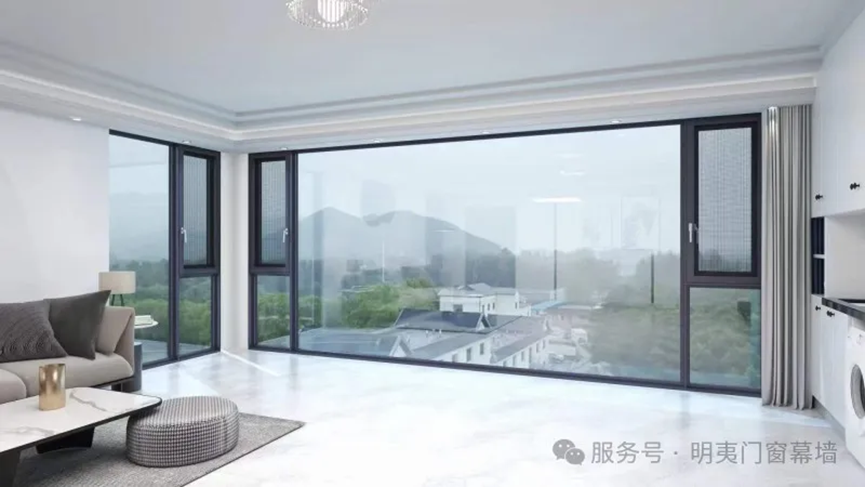
national standards (≥1.8 mm), and high-quality branded hardware.
Every door and every window marks the beginning of a beautiful life. Behind Mingyi Doors' 23-year dedication to doors and windows lies the unwavering commitment and steadfast craftsmanship of its artisans—representing the true essence of quality living. With Mingyi Doors, you can choose with confidence, purchase with peace of mind, and use with complete ease.

