


Which Window Profile Offers Better Sound Insulation?
Which Window Profile Offers Better Sound Insulation?
Noise from daily life is familiar to everyone. The rumble of construction‑site machinery, blaring music from square‑dancing activities, hubbub of crowds in street markets, vendors’ cries, vehicle horns, and the highly penetrating sound of electric drills during neighbours’ renovations. All these form a swirling vortex of noise, robbing people of moments of peace and quiet.
When it comes to noise, we have to talk about the sound‑insulation design of modern thermal‑break aluminium windows and doors. What are the misunderstandings and correct practices for custom‑built sound‑insulating residential windows and doors?
1. Distinguish between high‑frequency and low‑frequency noise
Low‑frequency noise refers to sound with a vibration frequency below 500 Hz; more specifically, it falls within the range of 20 Hz‑500 Hz in Chinese standards. Irregular sounds vibrating 20‑500 times per second within this band are classified as low‑frequency noise.
High‑frequency noise can be effectively blocked and weakened by walls and windows. However, low‑frequency noise easily penetrates building structures. For instance, the hum of large air‑conditioner outdoor units and the low‑frequency roar of road traffic remain clearly audible even at a distance or behind building obstructions. Such strong penetration makes low‑frequency noise difficult to mitigate and causes persistent disturbance to indoor living and working environments.

High‑frequency noise decays noticeably during transmission. Its energy dissipates rapidly over distance or when hitting obstacles. A well‑known reference is that noise decreases by 6 dB every time the transmission distance doubles.
Foot‑steps serve as a typical example of high‑frequency noise. In open spaces, foot‑step sounds fade as distance increases, and they drop off far more sharply when blocked by walls.
Unlike high‑frequency noise, low‑frequency noise barely weakens with distance and retains strong influence far from the source. For example, even if an elevator machine room sits on the top floor, its low‑frequency humming can travel through building structures and be heard on lower floors. Its ability to pass through walls and floors makes low‑frequency noise a tough challenge for sound‑insulation solutions.
2. How much does gas filling in insulating glass improve sound insulation?
Argon‑filled insulating glass delivers notable performance gains mainly for thermal performance. Ordinary dry air has a relatively high thermal‑conductivity coefficient, allowing heat to transfer readily. As an inert gas, argon features lower thermal conductivity. Filling the insulating cavity with argon creates a barrier against heat transfer.
U‑value, a key metric for window thermal performance, measures the rate of heat transfer through windows. Argon filling lowers the U‑value and improves thermal insulation, boosting thermal performance by roughly 10 % compared with insulating glass filled only with dry air.
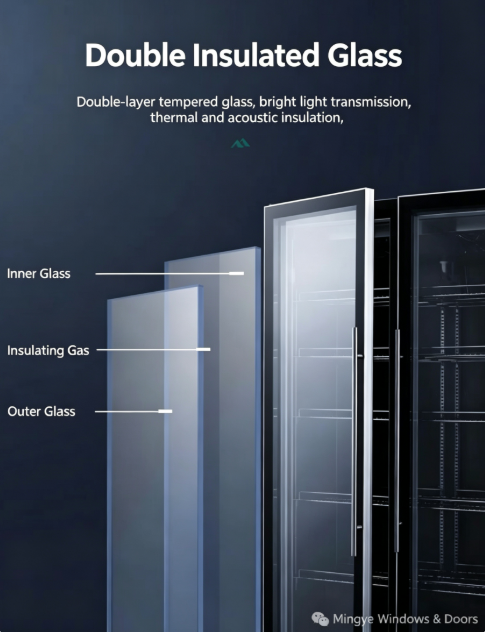
Nevertheless, Mingye Windows & Doors would point out that argon filling brings little improvement to sound insulation. The sound‑insulating performance of household windows depends primarily on glass thickness, glass layers, cavity width, structural design, and the sealing performance of sashes (e.g. EPDM sealing gaskets). Inert gas filling mainly targets thermal insulation and has limited impact on noise reduction.
3. Custom‑window solutions against low‑frequency noise
Window selection plays a vital role in achieving excellent sound‑insulating performance, and casement windows are the optimal option. When closed, casement windows form a tight sealing system, which is the core of their superior noise‑reduction capability.
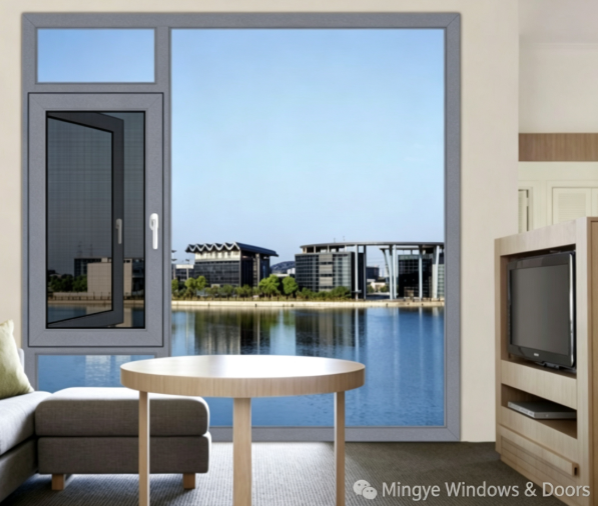
For residential communities far from heavy urban or road noise, standard insulating glass provides satisfactory sound attenuation thanks to its air gap that hinders sound transmission.Houses near schools or plazas are mainly exposed to high‑frequency noise such as crowd chatter and loudspeaker announcements. In such cases, triple‑glazed double‑cavity glass is a suitable upgrade.
Dwellings adjacent to roads or elevated highways face a mixed noise environment combining high‑frequency and highly‑penetrating long‑range low‑frequency traffic noise. Laminated insulating glass becomes the ideal solution. It combines the strengths of laminated glass and insulating glass within one composite structure.

