


Sliding Door vs Folding Door: Which Is Better For Your Home?
Sliding Door vs Folding Door: Do You Really Know How to Choose?
Many homeowners get stuck when renovating, wondering whether to pick folding doors or glass sliding doors. Today we will elaborate on the features of folding doors and sliding doors to help you make a wise decision. Both sliding doors and folding doors have high, medium and low grades. We cannot simply judge them only by appearance.
So how do you choose between folding doors and sliding doors?
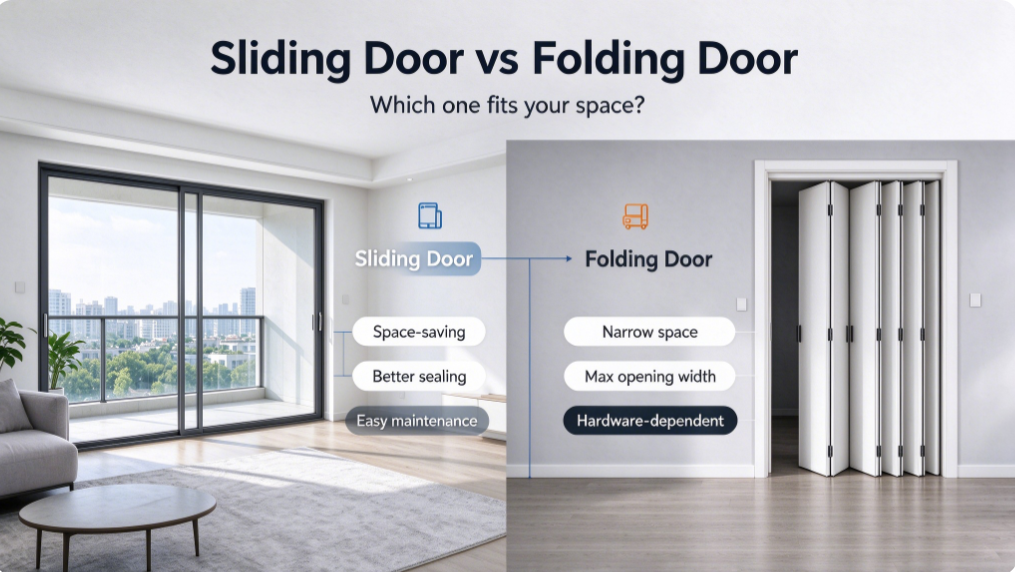
First, let’s talk about the main cost differences:
Three Surface Treatment Options for Aluminum Profiles
1.Electrophoresis and oxidation wire drawing: This formal process includes more than 10 working procedures. The aluminum profile has uniform color, excellent anti-fading performance and delicate texture.
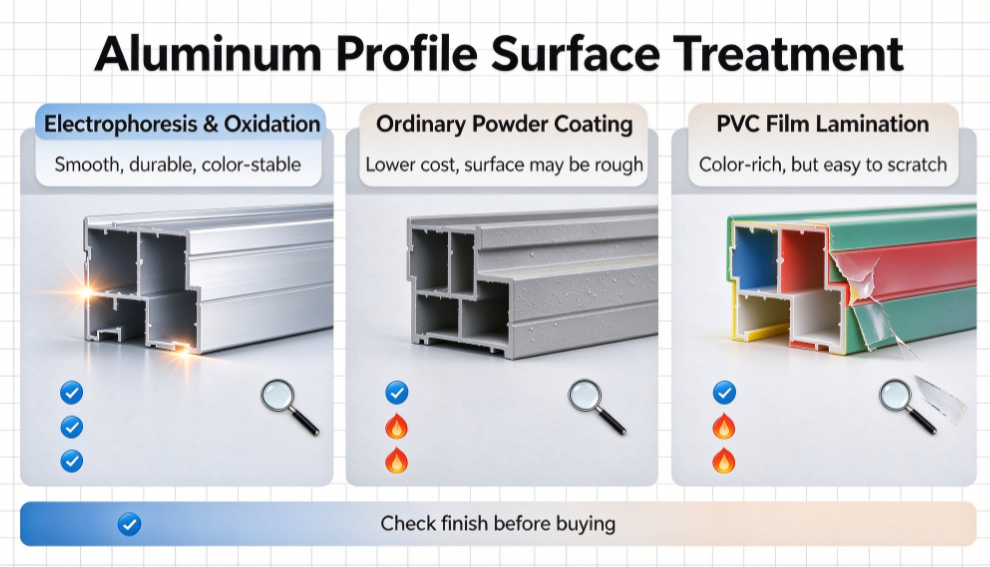
2.Ordinary powder coating: It involves around 5 production steps. The surface may feel slightly rough, so careful comparison is needed during selection.
3.PVC film lamination: It offers rich color options. The downside is that the PVC film is easy to scratch and blister.
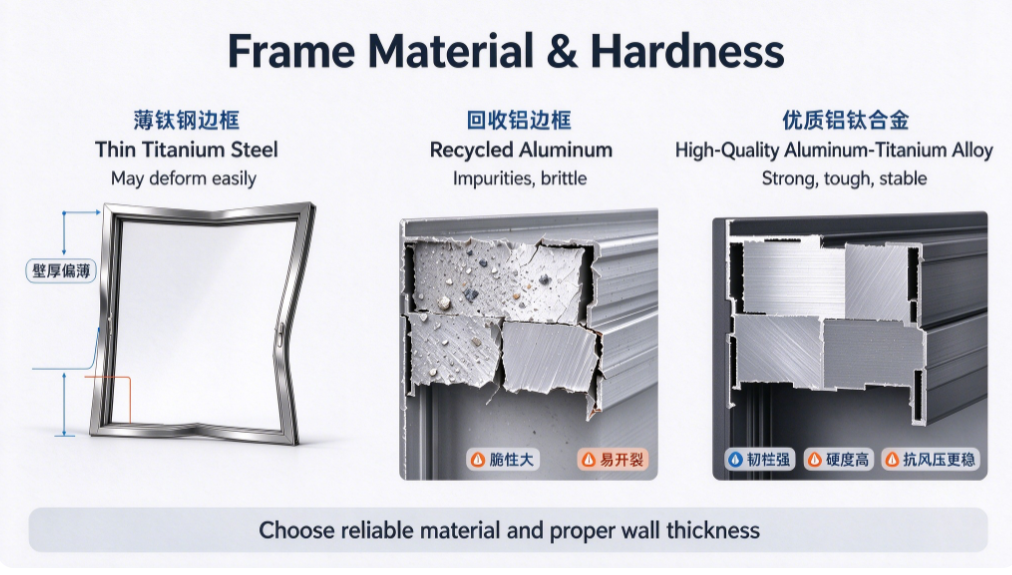
Material and Hardness of Door Frames
Common materials for sliding door frames on the market include carbon steel and aluminum-titanium alloy. Low-cost titanium steel profiles are relatively thin and prone to deformation. Aluminum alloy is divided into recycled aluminum and high-quality aluminum-titanium alloy. Please check carefully and avoid door frames made of poor-quality recycled aluminum.
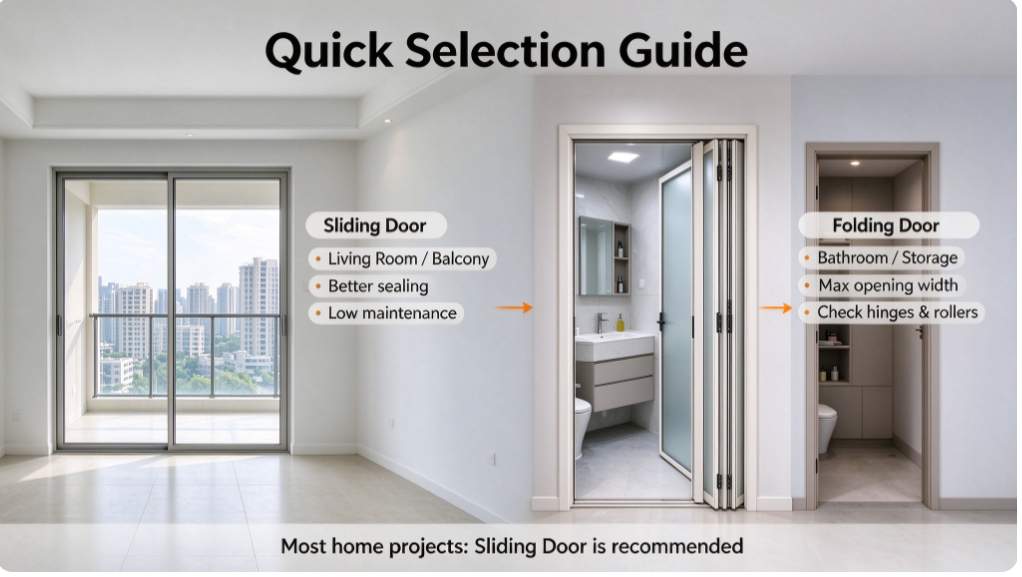
Now back to the selection of folding doors and sliding doors. Generally speaking, sliding doors are more recommended.
Reasons:
1.Sliding doors save space, are easy to clean, bring good daylighting and visually enlarge the room.
2.Sliding doors are comfortable and practical visually. The 2-panel glass sliding door is recommended for its attractive appearance.
3.Sliding doors feature good airtightness and sound insulation. The sliding operation is convenient. The bottom can be leveled with floor tiles for a neat look.
4.Folding doors open to both sides and take up little space. Their narrower door leaves occupy even less space than ordinary sliding doors. Thus folding doors work better for compact spaces such as bathrooms and storage rooms.
Extra Tips to Avoid Pitfalls
1.Profile thickness: ≥1.2mm for indoor partition doors; ≥1.4mm for balcony doors. Thin profiles deform easily.
2.Hardware matters: Rollers, hinges and locks are vulnerable parts. Brand hardware ensures smooth operation and longer service life.
3.Glass recommendation: Tempered glass is safe and shatterproof for large door panels. Insulated glass is optional for better thermal and acoustic performance.
4.Track selection: Low-profile flush tracks are preferred for families with kids or elderly people to prevent tripping hazards.
Summary
✅ Sliding doors are ideal for large openings in living rooms & balconies if you value sound/heat insulation and low maintenance.
✅ Folding doors fit small openings such as bathrooms and storage rooms when maximum opening width is needed.
No door type is absolutely better. The best choice depends on your space, budget and careful checks on profile workmanship.
-END-

